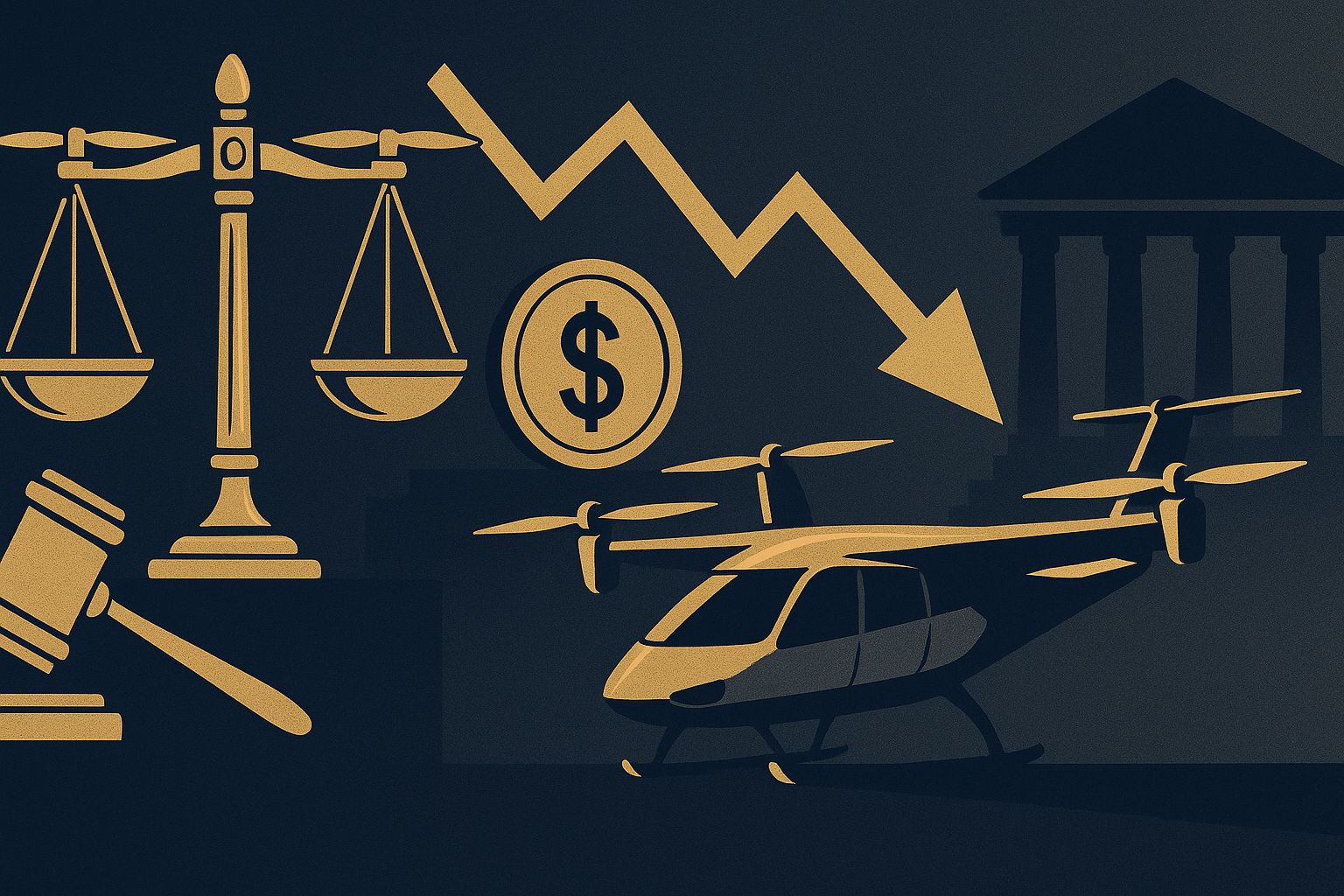
The promise of air taxis, long depicted as a futuristic solution to urban congestion, is being overshadowed by a series of legal disputes that threaten to stall the industry’s progress. Despite the backing of President Donald Trump’s eVTOL pilot program, the sector is grappling with infighting and investor hesitation.
What happened
Legal battles have erupted between leading players in the electric vertical take-off and landing (eVTOL) sector. Joby Aviation has accused Archer of corporate espionage, alleging that Archer used stolen information to interfere with a real estate deal. In retaliation, Archer has claimed that Joby engaged in deceptive practices, including misclassifying aircraft parts to defraud the U.S. government. Not to be left out, Archer is also embroiled in a patent infringement suit against Vertical Aerospace, which it claims copied its Midnight aircraft design. All these cases are currently making their way through the court system, casting a shadow over the sector’s potential.
Why it matters
The air taxi industry is at a critical juncture where achieving Federal Aviation Administration (FAA) certification is paramount for commercial viability. The Trump administration’s pilot program was designed to fast-track this process, offering a much-needed boost. However, the ongoing legal disputes could derail these efforts by diverting resources and attention away from certification and development. Investors, already skittish due to market volatility and the complex regulatory landscape, may further distance themselves from the sector, as evidenced by significant stock value declines for key players like Archer, Vertical Aerospace, and Joby Aviation.
The precedent
The eVTOL industry’s current predicament mirrors past tech sectors where hype outpaced reality, such as the early days of the autonomous vehicle industry. Like the air taxis today, self-driving cars were once heralded as imminent game-changers. However, legal challenges, regulatory hurdles, and technological limitations have delayed widespread adoption. The air taxi industry risks following a similar trajectory, where legal and logistical complications overshadow technological advancements.
Postmortem
The avoidable mistake here lies in the industry’s inability to present a united front in the face of regulatory and market challenges. The internal conflicts and lawsuits not only sap financial and human resources but also tarnish the industry’s reputation. The focus has shifted from innovation and collaboration to litigation, which is a costly distraction at a time when the sector needs to prove its viability to both regulators and investors.
What to watch
Looking ahead, several factors will determine the fate of the air taxi industry. Key among them is the resolution of the ongoing lawsuits, which could either clear the path for progress or further entrench divisions. Additionally, the pace at which companies achieve FAA certification will be crucial. Watch for updates on the progress of the Trump administration’s pilot program, as well as any shifts in investor sentiment following legal resolutions. The industry’s ability to build necessary infrastructure, such as vertiports and charging stations, will also be a significant factor in its eventual success or failure.
As the air taxi industry navigates these turbulent times, the larger structural question remains: can the sector overcome its internal divisions and regulatory hurdles to deliver on its promise of transforming urban mobility?
Source: https://www.cnbc.com/2026/05/29/evtol-air-taxi-lawsuits-us-launch-trump.html
Leave a Reply