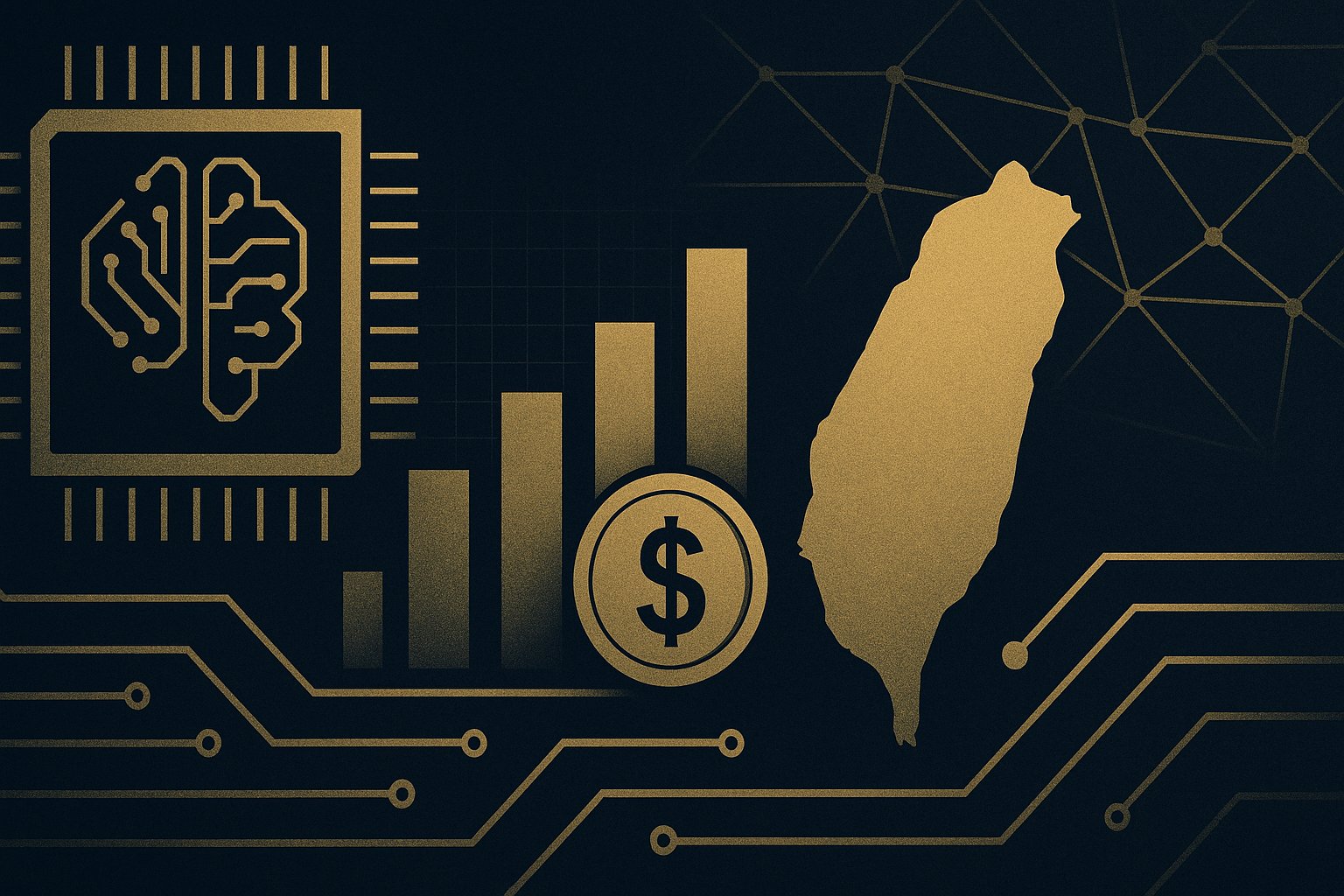
Nvidia’s decision to invest a staggering $150 billion annually into Taiwan is a bold move that underscores the island’s pivotal role in the AI industry. However, this strategic pivot raises questions about the viability of U.S. ambitions to become the global AI hub.
What happened
Nvidia CEO Jensen Huang announced that the company will channel $150 billion each year into Taiwan, aiming to cement it as the ‘epicenter’ of the AI revolution. This investment will fund the creation of a new Taiwan headquarters for Nvidia, expected to be operational by 2030. Huang emphasized Taiwan’s crucial role in the AI ecosystem, citing its existing infrastructure and partnerships as key factors in this decision. The move comes after Nvidia’s historic achievement in 2025 of reaching a $5 trillion market capitalization, making it the world’s most valuable company.
The investment marks a dramatic increase from Nvidia’s previous spending in Taiwan, which ranged between $10 and $15 billion annually. This expansion not only highlights Nvidia’s commitment to Taiwan but also raises questions about how this aligns with former President Donald Trump’s vision of establishing the U.S. as the primary hub for AI development.
Why it matters
For the AI industry, Nvidia’s investment in Taiwan is a double-edged sword. On one hand, it underscores Taiwan’s indispensable role in the production and innovation of AI technologies, leveraging its established manufacturing capabilities and supply chain. On the other hand, it highlights a potential over-reliance on a geopolitically sensitive region. As tensions continue to simmer between the U.S. and China, Taiwan’s strategic importance—and vulnerability—becomes increasingly apparent.
The U.S., under Trump’s AI Action Plan, aimed to bolster domestic AI capabilities and reduce dependency on foreign manufacturing. Nvidia’s pivot to Taiwan suggests a disconnect between these ambitions and the industry’s realities. The move could signal to other tech giants that Taiwan remains the more viable option for AI development, despite U.S. efforts to incentivize domestic production.
The precedent
This isn’t the first time a major tech company has bet heavily on Taiwan. In the semiconductor industry, Taiwan Semiconductor Manufacturing Company (TSMC) has long been a cornerstone, with companies like Apple and AMD relying heavily on its manufacturing prowess. However, TSMC’s dominance has also highlighted risks, as any disruption in Taiwan could have ripple effects across the global tech industry. Nvidia’s investment follows this pattern, reinforcing Taiwan’s role while simultaneously underscoring the risks of concentrated dependency.
Postmortem
Nvidia’s decision to significantly ramp up its investment in Taiwan reflects a strategic calculation that prioritizes immediate benefits over long-term geopolitical risks. While the infrastructure and talent in Taiwan are unparalleled, the decision exposes Nvidia to potential volatility in the region. The gamble here is whether the benefits of leveraging Taiwan’s existing capabilities outweigh the risks associated with geopolitical tensions.
Moreover, this move may indicate a lack of confidence in the U.S.’s ability to rapidly scale up its AI manufacturing capabilities. Despite efforts to incentivize onshore production, the reality is that Taiwan’s established ecosystem presents a more immediate and less costly option for Nvidia.
What to watch
Moving forward, several markers will be critical in assessing the success of Nvidia’s Taiwan strategy. First, the progress of the new headquarters and its impact on Nvidia’s innovation pipeline will be telling. Additionally, any shifts in U.S. policy under new administrations could influence Nvidia’s operations and strategy.
Furthermore, monitoring geopolitical developments in the Taiwan Strait will be crucial, as any escalation could disrupt not only Nvidia’s plans but the broader tech industry. Finally, watching how other companies respond—whether they follow Nvidia’s lead or double down on U.S. investments—will offer insights into the industry’s strategic direction.
In the grand scheme, Nvidia’s $150 billion bet on Taiwan raises larger structural questions about the balance between leveraging existing global manufacturing hubs and the risks of geopolitical dependencies. As the AI race intensifies, the stakes for both companies and countries will only get higher.