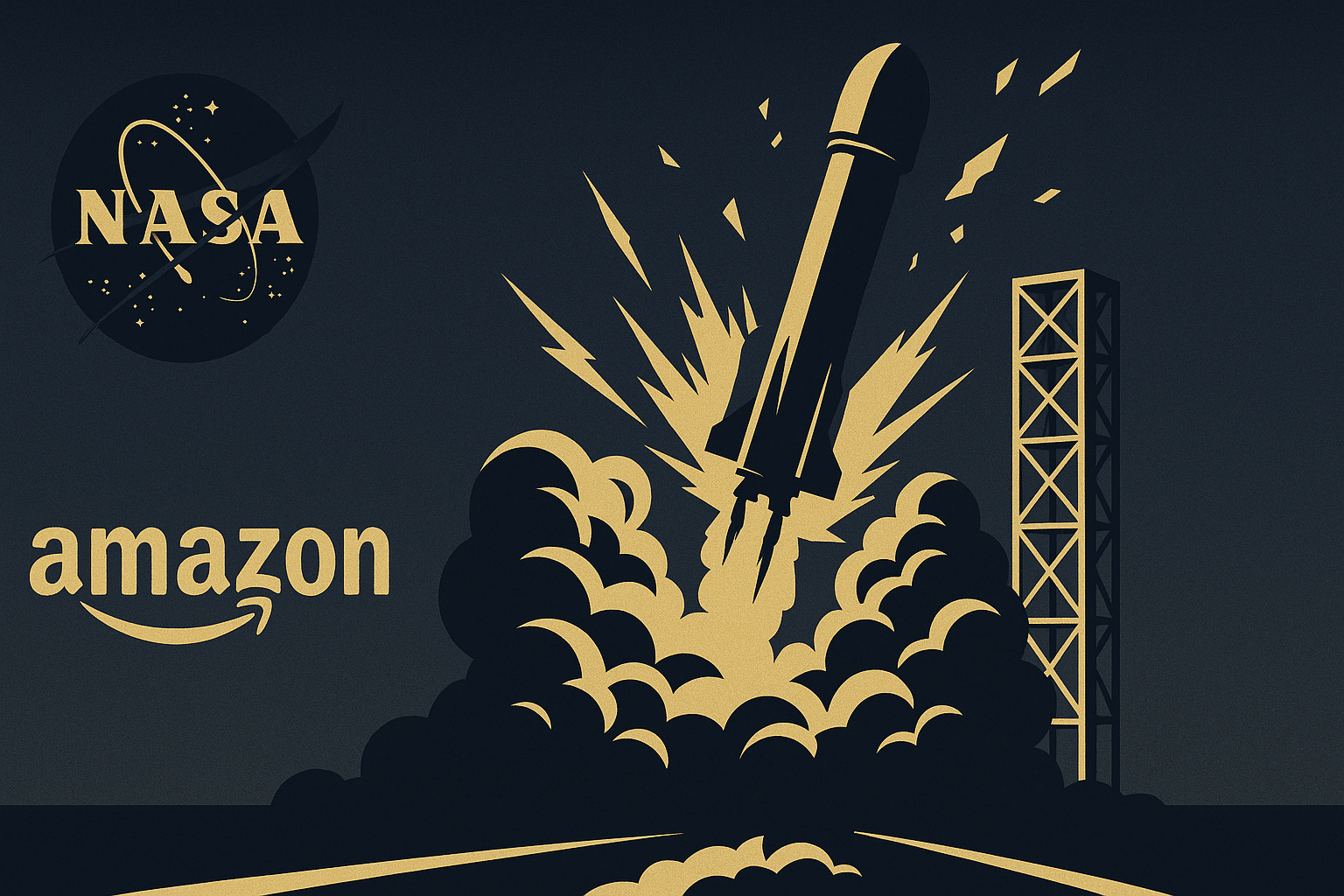
In the high-stakes arena of space exploration, Blue Origin’s New Glenn rocket explosion is a stark reminder that even the best-laid plans of billionaires can go spectacularly awry. The mishap, which occurred during a hot-fire test at Blue Origin’s Florida launch site, has thrown a wrench into NASA’s Moon base ambitions and Amazon’s burgeoning satellite constellation.
What happened
The incident unfolded during a routine test at Blue Origin’s Launch Complex 36A, where seven engines of the New Glenn rocket’s booster stage were ignited. Unfortunately, the test did not go as planned, resulting in a dramatic explosion that severely damaged the only launchpad available for the New Glenn. This setback not only delays the rocket’s future missions but also complicates timelines for NASA and Amazon, two of Blue Origin’s major clients. According to The Verge, the damage could take months to repair, potentially pushing back the next launch to 2027.
Why it matters
The repercussions of this explosion are profound. For NASA, the delay in the New Glenn’s availability could impact its plans to deliver a robotic lunar lander by fall 2026 and participate in the Artemis III mission in 2027. The Artemis mission is integral to NASA’s strategy for returning humans to the Moon and establishing a sustainable presence. Meanwhile, Amazon’s ambitions to compete with SpaceX’s Starlink in the satellite internet space are jeopardized. The New Glenn was slated to carry 48 Amazon Leo satellites into orbit, a vital step towards meeting FCC requirements for their satellite constellation.
The precedent
This isn’t the first time a rocket explosion has disrupted ambitious space plans. SpaceX, another titan in the commercial space race, experienced a similar setback in 2016 when its Falcon 9 rocket exploded on the launch pad. That incident led to a temporary halt in launches, but SpaceX managed to bounce back, thanks in part to its robust infrastructure and multiple launch sites. Blue Origin, however, may find recovery more challenging due to its reliance on a single launchpad for the New Glenn.
Postmortem
The explosion highlights potential governance and operational lapses within Blue Origin’s testing protocols. While spaceflight is inherently risky, the scale of the damage suggests a need for more stringent safety measures and contingency plans. The company’s reliance on a single launchpad for a rocket as critical as the New Glenn is a vulnerability that has now been exposed. Additionally, the financial implications are significant. Delays could lead to penalties or lost contracts, further straining Blue Origin’s resources.
What to watch
Going forward, several markers will be crucial in assessing Blue Origin’s recovery. The timeline for repairing the launchpad will be a key indicator of the company’s ability to resume its mission schedule. Additionally, the outcome of the investigation into the explosion’s cause will be closely watched. For NASA and Amazon, alternative arrangements will need to be considered, such as relying more on secondary providers like United Launch Alliance and Arianespace. The competitive dynamics between Blue Origin and SpaceX will also be an area of interest, especially if Amazon turns to SpaceX for launch capabilities.
The larger structural question this incident raises is about the sustainability and resilience of current space exploration strategies. As reliance on commercial partners increases, so too does the need for robust risk management frameworks and diversified launch infrastructure. The New Glenn explosion serves as a costly reminder of the fragility inherent in space ventures, and the need for a more resilient approach.