Blog

  • AI’s Circular Revenue: A House of Cards?

    AI’s Circular Revenue: A House of Cards?

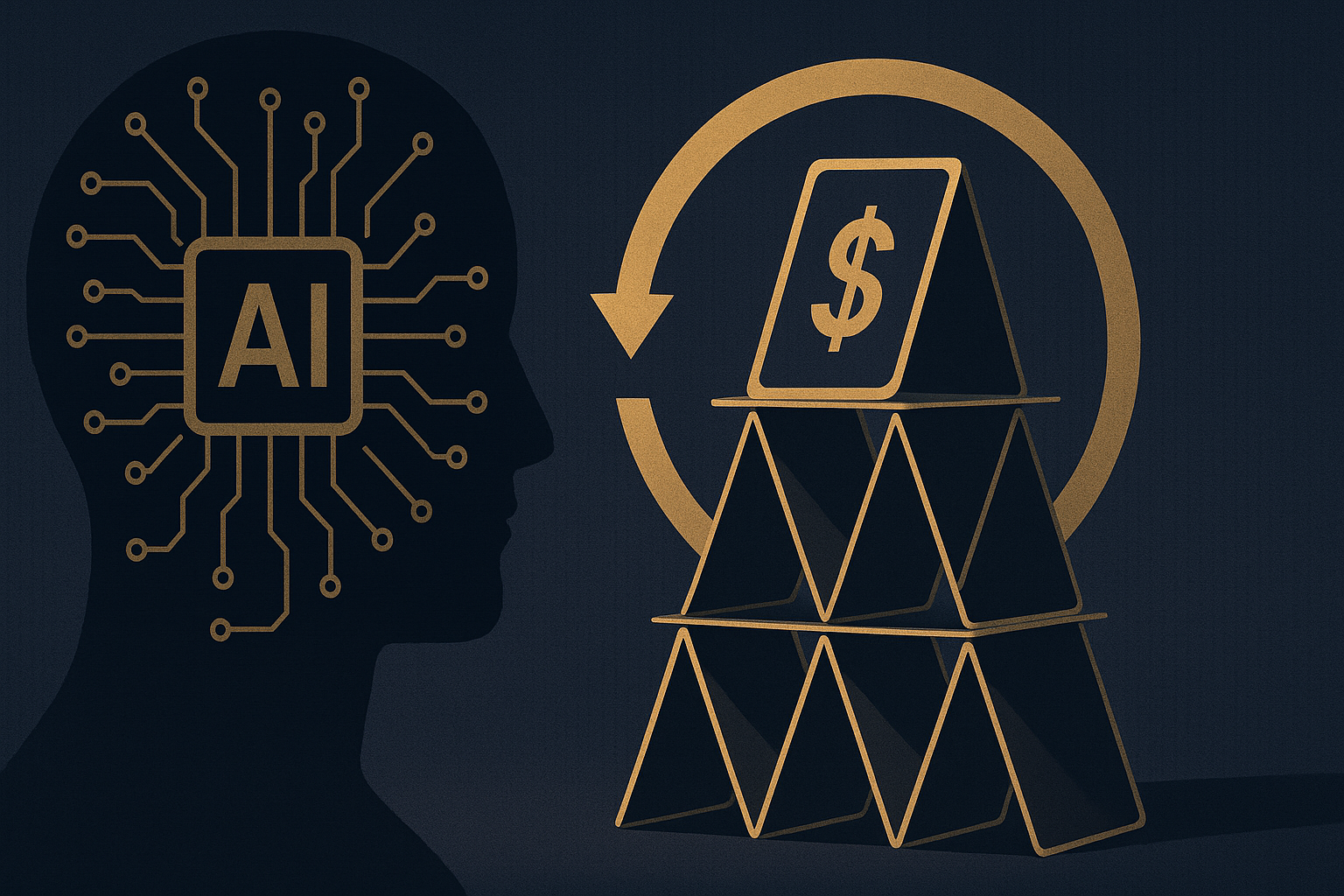
    The AI industry’s meteoric rise might be built on a shaky foundation of circular accounting practices, raising red flags about the sustainability of its revenue streams and investor trust. Recent reports suggest that major tech firms are engaging in accounting maneuvers that inflate their financial statements through so-called “round trip revenue loops.”

    What happened

    The crux of the issue lies in the financial interactions between tech giants like Microsoft, Amazon, and AI startups such as OpenAI and Anthropic. For instance, Microsoft’s $13 billion investment in OpenAI wasn’t just a cash infusion; it involved “cloud credits” for using Microsoft’s servers. OpenAI, in turn, used these credits to train its models, which Microsoft then booked as new “cloud revenue”—essentially paying itself with its own money (source). This kind of accounting trickery inflates cloud revenue figures, creating an illusion of robust business activity.

    Why it matters

    The implications of these practices extend beyond the balance sheets of individual companies. They could significantly distort market perceptions of the AI sector’s growth and profitability. When tech giants report paper profits by marking up the value of their investments based on these inflated transactions, it misleads investors and analysts about the true financial health of these companies. For instance, Alphabet reported a substantial profit partly due to these paper gains from its Anthropic investment.

    Postmortem

    This situation underscores the dangers of aggressive accounting practices. The artificial inflation of revenue figures through circular arrangements can lead to a false sense of security among investors and stakeholders. The reliance on such tactics highlights a fundamental issue: the AI industry’s current growth narrative may be more fragile than it appears. The real risk is that this house of cards could collapse if these accounting practices are scrutinized or if the underlying assumptions of value creation are challenged.

    Moreover, this practice can erode investor trust. If stakeholders begin to question the authenticity of reported revenues and profits, it could lead to increased volatility in stock prices and a reevaluation of AI companies’ valuations.

    The open question remains: Can the AI boom sustain itself without resorting to such accounting gymnastics, or is the industry heading for a reality check that could reshape its financial landscape?


  • Apple’s Epic Legal Battle: Supreme Stakes for App Store Rules

    Apple’s Epic Legal Battle: Supreme Stakes for App Store Rules

    In the ongoing saga between Apple and Epic Games, the tech giant is now asking the Supreme Court to narrow an injunction that Epic won, arguing that the ruling should not apply to all developers on the U.S. App Store. This move is the latest in a five-year legal battle over App Store fees, with Apple contending that Epic’s issues shouldn’t dictate terms for everyone, including companies like Microsoft and Spotify (TechCrunch).

    What happened

    Apple is appealing a decision from the Ninth Circuit Court that found the company in contempt for charging a 27% fee on payments made through external links in apps. These links were meant to allow developers to bypass Apple’s payment system, a requirement from a previous injunction. Apple argues that the injunction’s wording was vague and didn’t explicitly prohibit such fees, hence its compliance (TechCrunch).

    Why it matters

    The outcome of this case could have wide-reaching implications not only for Apple but for the entire app development ecosystem. If the Supreme Court rules against Apple, it could lead to a significant overhaul of App Store governance. This might open the floodgates for developers to implement their own payment systems, potentially reducing Apple’s lucrative commission revenues. Such a shift could also set a precedent affecting other tech giants with similar marketplace structures.

    Postmortem

    Apple’s insistence on maintaining its fee structure, despite the legal risks and potential damage to its public image, highlights a stubborn adherence to a lucrative business model. The company’s decision to charge fees on external payments was a calculated risk that backfired, leading to a contempt ruling. This case exemplifies the challenges of balancing profitability with regulatory compliance and developer goodwill. Apple’s strategy to appeal on narrow legal grounds, rather than addressing the broader implications of its business practices, may be a short-sighted approach that prolongs legal uncertainty.

    As Apple’s legal maneuvers continue, the tech world waits to see if the Supreme Court will uphold the existing injunction or provide Apple the relief it seeks. For investors and developers alike, the question remains: will Apple’s App Store model evolve to accommodate a more open payment ecosystem, or will it cling to its current model at all costs?

  • Elon Musk’s Solar Retreat: A Shift That Raises Eyebrows and Risks

    Elon Musk’s Solar Retreat: A Shift That Raises Eyebrows and Risks

    In a surprising twist, Elon Musk, the poster child for clean energy advocacy, appears to have shifted gears from solar power to natural gas and space-based solutions. This pivot raises questions about investor trust and long-term strategy, especially given Musk’s previous commitments to a solar-electric future.

    What happened

    Elon Musk’s company, xAI, has recently embraced natural gas, utilizing unregulated turbines to power its data centers. This is a stark departure from Tesla’s long-standing commitment to solar energy, outlined in its Master Plans. The SpaceX IPO filing further underscores this shift by highlighting a focus on space-based solar power, which SpaceX claims can generate significantly more energy than terrestrial options due to continuous sunlight exposure (TechCrunch).

    Why it matters

    This strategic pivot could have far-reaching implications. Musk’s prior advocacy for solar power was a cornerstone of Tesla’s brand and mission. By moving towards fossil fuels and speculative space-based solutions, there’s a risk of eroding investor confidence and public trust. The move also highlights the broader industry challenge of sustainably meeting the soaring energy demands of AI data centers, which Musk argues could soon exceed current global capacities.

    Postmortem

    The avoidable mistake here seems to be the suddenness of the pivot and the lack of clear communication about how these new strategies align with previous commitments. Musk has built a reputation on transformative visions, but this shift feels more reactionary than revolutionary. The reliance on natural gas could be seen as a stopgap, but without a clear timeline or roadmap back to sustainable energy, it sends mixed signals to stakeholders. Furthermore, the economics of space-based solar power remain dubious at best, with high costs and technical challenges that could delay or derail these plans.

    Investors and the public are left to wonder: is this a temporary detour or a permanent change in direction? Musk’s track record of spotting trends and pushing boundaries is well-documented, but this latest move could either be a masterstroke or a misstep. As the world grapples with increasing energy demands, the question remains whether Musk’s gamble on space will pay off, or if he’ll need to revisit the drawing board here on Earth.